
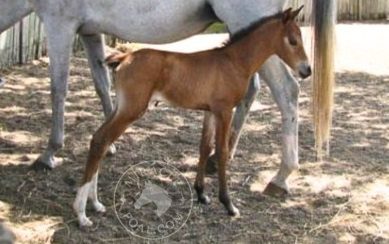
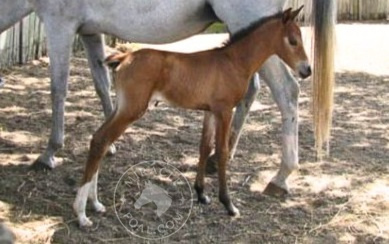
Long-term research into the effects of premature or dysmature birth in horses is made difficult by the lifestyle of the domestic horse. There are so many different factors and they can all just as easily be stress-inducing as life-enhancing. Compare the life of horses to those of a flock of sheep living in a paddock and you’ll get the picture!
This make me think I must have been mad to research gestational immaturity, but as a bodyworker, it was literally under my hands and before my eyes when I worked with horses that I suspected were affected.
Would I have started if I’d truly known the challenges involved? I’m not sure!! Let’s just say that today I hold that the only way to decide whether to take on a PhD is to feel that you can’t NOT do it, and that’s how it was for me – I needed to know.
Maybe sometimes it’s better to not truly understand difficulties, as that way we can overcome them without fear stopping us?
However, I soon learned about the extent of the research challenges. Growing and adult horses are affected by SO many factors, which translate to variables that border on unmanageable within a research context. (Hear more about that in this Integrative Animal Health Collective podcast interview.)
But while it’s imperfect and the limitations are rife, it seems that with these development issues, the alternative is to do nothing – right?
And that’s how it’s been for a long time. Longitudinal research in horses is hard, and when it involves unpredictable gestational events, even harder. Let’s just say that some methods used in the past to induce these events would clearly not pass ethical considerations today.
We can be grateful for the knowledge that was established by the greats of the field, but now we need to start somewhere a bit different… but where?
I discovered that the only way I could research this area was to find horses with a history of gestational immaturity that remained with family groups and their breeder, so we had some semblance of control (standardization).
This was sufficient to achieve results that point to a problem in which I think of as a syndrome of gestational immaturity in which wome horses have no effects, others have some, and a few unfortunates have many.
My goal is now to encourage breeders, owners and professionals to at least consider the possibility that developmental issues associated with gestational immaturity might be affecting some of the horses we are asking to do so much.
I have some ideas about how research might move forward in this topic, but it requires a research team and a large number of horses in a breeding program, that would be monitored over a number of years. It’s not impossible, as any look at gestation length studies in the literature reveals. But it does need a major commitment on several fronts at once, and I’m not sure how possible that aspect of it is.